Journaling Doesn't Work for Me — Here's What Might Actually Be Going Wrong
Quick Answer: ‘Journaling doesn’t work for me’ usually means the specific format you tried (open-ended blank-page reflection) doesn’t match how you process thoughts. Structured prompts, bullet lists, or voice-to-text journaling often work for people who bounce off traditional diary-style writing.
You’ve tried it three separate times over the years. Bought the nice notebook, wrote for a week, then quietly stopped. Before concluding journaling ‘just isn’t for you,’ consider that you might have only tried one format out of several very different ones.

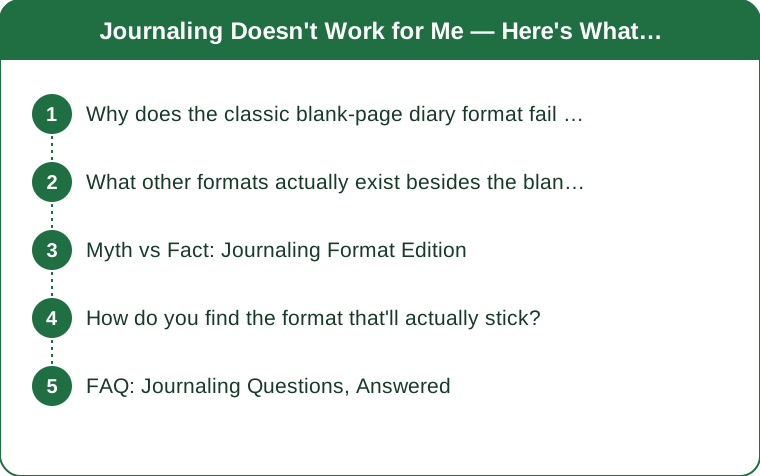
Why does the classic blank-page diary format fail so many people?
Open-ended, unstructured writing (“Dear diary, today I…”) requires a specific kind of free-associative processing that doesn’t match everyone’s thinking style. For people who think in lists, bullet points, or structured categories, staring at a blank page feels like an obstacle, not a release — the format itself is the mismatch, not journaling as a concept.
What other formats actually exist besides the blank page?
Prompted journaling (answering one specific question daily, like ‘what’s one thing that went well’), bullet journaling (short lists rather than prose), gratitude-only journaling (3 bullet points, nothing more), and voice-to-text journaling (talking instead of writing) all deliver similar reflective benefits through a completely different mechanism.

Myth vs Fact: Journaling Format Edition
Myth: Real journaling has to be written by hand in prose. Fact: Voice memos transcribed to text, bullet lists, and single-word mood trackers all show similar benefits in reflection research — the mechanism is regular reflection, not a specific format.
Myth: You need to write a lot for it to count. Fact: A 3-bullet gratitude list takes 90 seconds and delivers measurable mood benefits in studies — length isn’t the active ingredient.
Myth: If you stopped, you failed at journaling. Fact: Stopping usually just means that specific format didn’t fit — it’s data about format mismatch, not a personal failure.
How do you find the format that’ll actually stick?
Try one prompted question per day for a week (something specific, not ‘how was your day’), then try a 3-bullet format for another week. Notice which one you don’t have to force yourself to do — the sticky format usually reveals itself within 5-7 days of low-pressure experimenting.
FAQ: Journaling Questions, Answered
What’s a good starter prompt if blank pages don’t work?
Something specific and concrete works better than open reflection — ‘what’s one thing that surprised me today’ beats ‘how do I feel.‘
Does typing count as much as handwriting?
Research suggests typed and handwritten reflection produce broadly similar benefits — pick whichever removes friction for you, since consistency matters more than medium.
How long before a journaling habit actually feels natural?
Most people report it feeling automatic within 3-4 weeks of a format that actually fits, versus never feeling natural with a mismatched one no matter how long they push through.
TL;DR:
- ‘Journaling doesn’t work for me’ often just means the wrong format was tried
- Blank-page prose is one option among many — prompts, bullets, and voice memos all count
- A 90-second, 3-bullet gratitude list shows similar benefits to long-form writing
- Test 2-3 formats for a week each; the sticky one reveals itself within 5-7 days
Keep Reading
This article is for general informational and styling purposes only. Fit, sizing, and product availability may vary.