What to Do When You Sit Down to Journal and Have Absolutely Nothing to Say
Quick Answer: When you have nothing to write, describing your literal surroundings or the last hour of your day in plain, boring detail almost always unlocks something more, since the blank page problem is usually about pressure, not a genuine lack of content.
You sit down with good intentions. Pen ready, page open. And then — nothing. Not a dramatic block, just a quiet, frustrating blank.

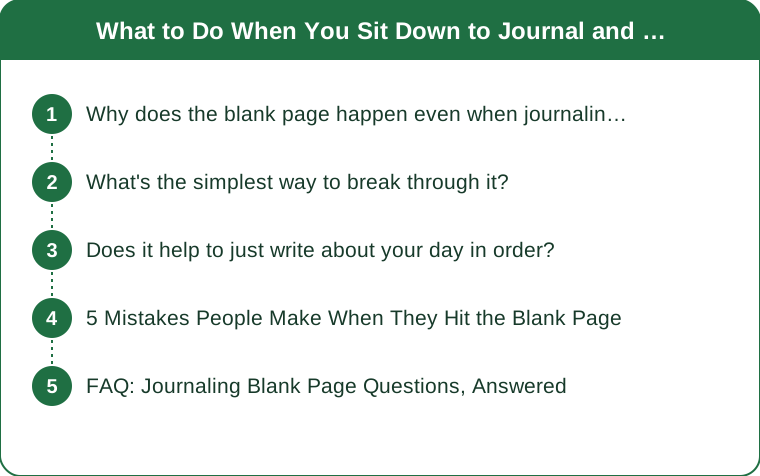
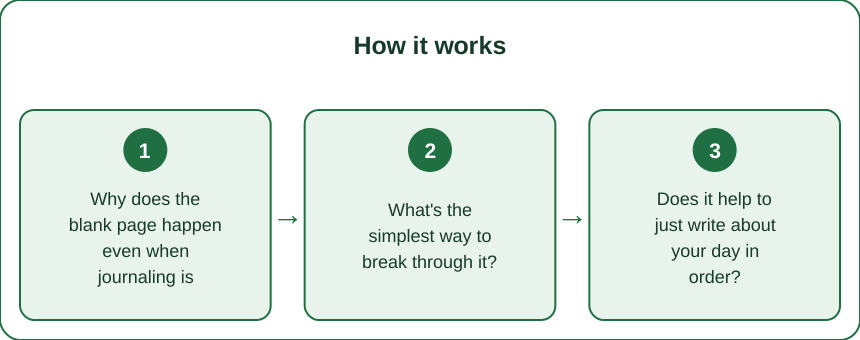
Why does the blank page happen even when journaling is supposed to help?
The pressure to write something meaningful is often what blocks the writing itself — treating each entry like it needs to be insightful creates a filter that blocks ordinary, useful thoughts before they reach the page.
Most people don’t actually lack things to say; they’re filtering out anything that feels “too boring” to write down, which ironically removes the easiest entry points.
What’s the simplest way to break through it?
Describing your literal physical surroundings — the room, the sounds, the time of day — in plain sentences almost always gets the pen moving, because there’s no pressure for it to be interesting.
Once a few boring sentences are down, the associative process of writing tends to surface a genuine thought or feeling that wasn’t accessible when staring at a blank page.

Does it help to just write about your day in order?
Yes — a simple chronological recap of the last few hours (what you did, who you talked to, how you felt) is one of the most reliable low-pressure prompts, since it requires no creativity, just observation.
This approach works especially well right before bed, when the day’s events are still fresh enough to recall in some detail.
5 Mistakes People Make When They Hit the Blank Page
- Waiting for a “big” thought before starting to write anything at all.
- Rereading old entries first, which raises the bar for what feels worth writing today.
- Trying to write in complete, polished sentences from the very first line.
- Giving up after one blank attempt instead of trying a different, simpler prompt.
- Treating a short, boring entry as a failure, when consistency matters more than content.
FAQ: Journaling Blank Page Questions, Answered
Is it okay if my journal entries are genuinely boring most days?
Yes — boring, consistent entries build the habit far more reliably than waiting for meaningful days, and interesting entries tend to show up on their own over time.
Should I use writing prompts if the blank page keeps happening?
Prompts can help short-term, but leaning on your literal surroundings or your day’s timeline works just as well and doesn’t require external material.
How short can a journal entry be and still count?
Even two or three sentences count — the habit of showing up regularly matters more than entry length.
TL;DR:
- The blank page is usually about self-imposed pressure, not a genuine lack of content
- Describing your literal surroundings or recapping your day in order almost always works
- Waiting for a meaningful thought before writing is the most common blocker
- Short, boring entries still count and build the habit just as well as longer ones
Next time the page feels blank, write about the blank feeling itself, or the room around you — it works more often than it should.
Keep Reading
This article is for general informational and styling purposes only. Fit, sizing, and product availability may vary.