Journaling on Your Phone vs. Paper: Does the Format Actually Change the Benefit?
Quick Answer: Handwritten journaling shows a modest edge for emotional processing and memory, likely because the slower pace forces more reflection, but digital journaling wins decisively on consistency for people who’d otherwise skip paper journaling — the best format is the one you’ll actually keep using.
The paper-versus-app journaling debate gets more attached to identity than the evidence really supports.

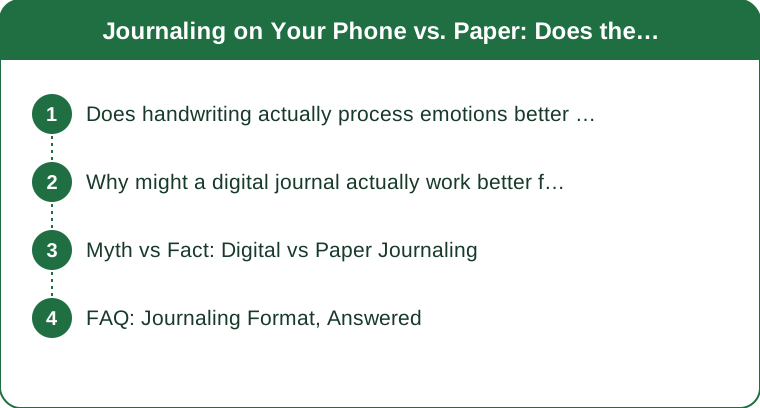
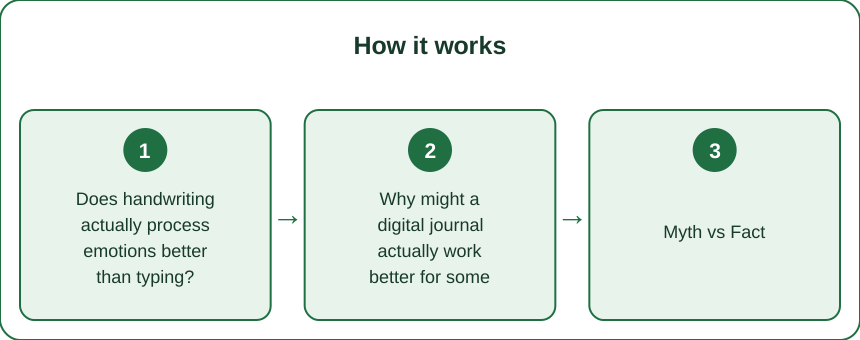
Does handwriting actually process emotions better than typing?
Some research suggests handwriting engages more of the brain’s motor and memory regions simultaneously, and the slower physical pace of writing by hand naturally slows down and deepens reflection compared to fast typing. The effect is real but modest, not the dramatic gap some paper-journaling advocates claim.
Why might a digital journal actually work better for some people?
Consistency beats format. A journaling app with reminders, on your phone at all times, gets used far more reliably by many people than a paper notebook that stays in a drawer. A slightly less ‘optimal’ format used daily outperforms a theoretically better format used once a month.

Myth vs Fact: Digital vs Paper Journaling
Myth: Digital journaling doesn’t count as ‘real’ journaling. Fact: The core benefit — externalizing thoughts and reflecting on them — works through either format; the medium is a preference, not a requirement.
Myth: Paper is always more private and secure. Fact: A password-protected app is often more private than a physical notebook that housemates or family could stumble on.
Myth: You have to pick one format and stick with it forever. Fact: Many people use both — quick digital notes during the day, a longer paper session weekly — with no downside to mixing.
FAQ: Journaling Format, Answered
Is there a best time to use paper versus an app?
Some people find paper better for deep, unhurried weekend reflection and apps better for quick daily check-ins — there’s no rule requiring one format per day.
Do journaling apps offer any benefit paper can’t?
Searchability and prompts are the two biggest — finding an entry from 3 months ago, or getting a guided prompt on a blank day, are both easier digitally.
Which format is better for building a daily habit?
Digital tends to win here for most people, mainly due to phone reminders and always having it accessible — but a notebook kept visible on a nightstand can work just as well.
TL;DR:
- Handwriting shows a modest edge for emotional processing, likely from its slower pace
- Digital journaling wins on consistency for people who’d otherwise skip paper journaling
- The core benefit works through either format — it’s not about picking the ‘correct’ one
- Many people mix both with no downside
The best journal format is the one still open a month from now — pick based on what you’ll actually use.
Keep Reading
This article is for general informational and styling purposes only. Fit, sizing, and product availability may vary.