What to Do When You Sit Down to Journal and Have Nothing to Say
Quick Answer: When you have nothing to say, skip the blank page entirely and use a structural prompt instead — list three things from today, finish the sentence ‘Right now I feel…’, or literally write ‘I don’t know what to write’ repeatedly until something else surfaces — the goal is moving your pen, not producing insight.
The blank page problem isn’t a sign journaling isn’t for you. It’s a sign you need a different entry point than a completely open page.

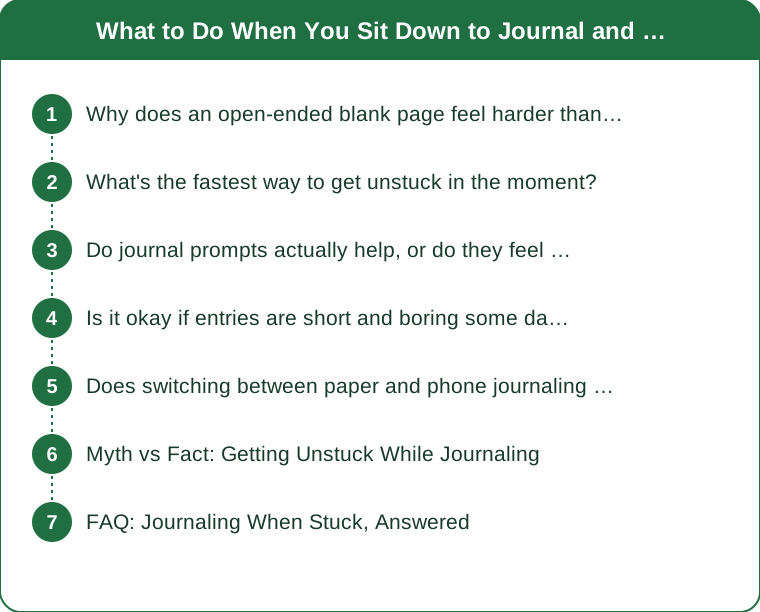
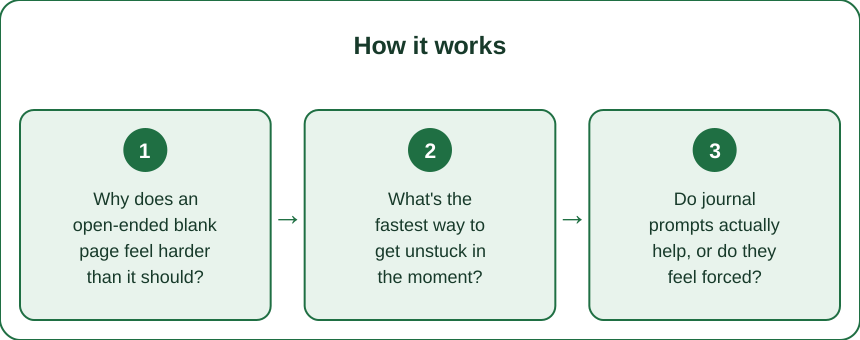
Why does an open-ended blank page feel harder than it should?
An open prompt like ‘write about your day’ requires you to first decide what’s worth writing about, which is a bigger cognitive task than actually writing once you know the topic. This decision-making step is where most stuck moments happen — not in the writing itself, but in the search for a starting point, which is why structured prompts remove the actual barrier.
What’s the fastest way to get unstuck in the moment?
Write the literal sentence ‘I don’t know what to write’ and keep going from there — repeating it, or writing about why you’re stuck, almost always breaks the block within a few sentences because it gives your hand something to do while your mind catches up. This feels silly the first time but works because journaling doesn’t require the entry to be interesting, just honest.
Do journal prompts actually help, or do they feel forced?
Prompts help most when they’re structural rather than deep — ‘three things from today,’ ‘one thing I’m avoiding,’ ‘a conversation I keep replaying’ — because they give you a shape to fill rather than asking you to generate both the topic and the content from nothing. Prompts aimed at big questions (‘what’s your purpose’) tend to feel forced precisely because they skip the easy on-ramp that smaller prompts provide.

Is it okay if entries are short and boring some days?
Yes — a two-line entry that just lists what happened is still a real journal entry and still keeps the habit alive, which matters more than any single entry being insightful. The habit of showing up daily, even briefly, is what makes journaling useful over months; the pressure to write something meaningful every time is actually what kills most people’s consistency.
Does switching between paper and phone journaling change how often you get stuck?
Some people find that switching format when stuck — moving from typing to handwriting, or vice versa — breaks the block simply by changing the physical act of writing, which resets the mental loop that was stuck. This isn’t universal, but it’s a low-cost thing to try before assuming the block is about content rather than format.
Myth vs Fact: Getting Unstuck While Journaling
Myth — if you have nothing to write, you should skip that day entirely. Fact — writing even a single boring line keeps the habit intact far better than skipping, since skipping is what actually breaks streaks and consistency. Myth — good journal entries need to reveal some insight. Fact — most valuable entries, in hindsight, are ordinary ones that simply captured a moment accurately.
FAQ: Journaling When Stuck, Answered
How long should you sit with the blank page before giving up on that session?
Try a structural prompt or the ‘I don’t know what to write’ trick for about 2 minutes; if nothing comes after that, a two-line entry is a perfectly fine stopping point.
Are journaling apps with built-in prompts worth using if you get stuck often?
Yes, especially early in a journaling habit — apps that rotate structural prompts remove the topic-selection barrier that causes most blank-page freezes.
Does getting stuck often mean journaling isn’t a good fit for you?
Not usually — most people who feel this way just haven’t found the right entry point yet, and switching from open prompts to structured ones resolves it for the majority of people who try it.
TL;DR:
- The blank page is hard because of topic-selection, not the writing itself
- Structural prompts (three things, one feeling, a replaying conversation) remove that barrier
- A short, boring two-line entry still counts and keeps the habit alive
- Writing ‘I don’t know what to write’ literally often breaks the block within sentences
The fix for a blank page isn’t waiting for inspiration — it’s picking any small structural entry point and starting there, even if the first line feels pointless.
Keep Reading
This article is for general informational and styling purposes only. Fit, sizing, and product availability may vary.