Why Typing a Journal Entry Genuinely Feels Different From Handwriting the Same Thoughts
Quick Answer: Handwriting a journal entry tends to produce slower, more deliberate, and often more emotionally processed writing than typing the same entry, largely because the physical slowness of handwriting naturally paces thought in a way that fast typing doesn’t, giving the brain more time to process and select what’s actually being written down.
It’s not a matter of one method being objectively superior — but the mechanical difference in speed genuinely changes the nature of what ends up on the page, and that’s worth knowing when picking a format.

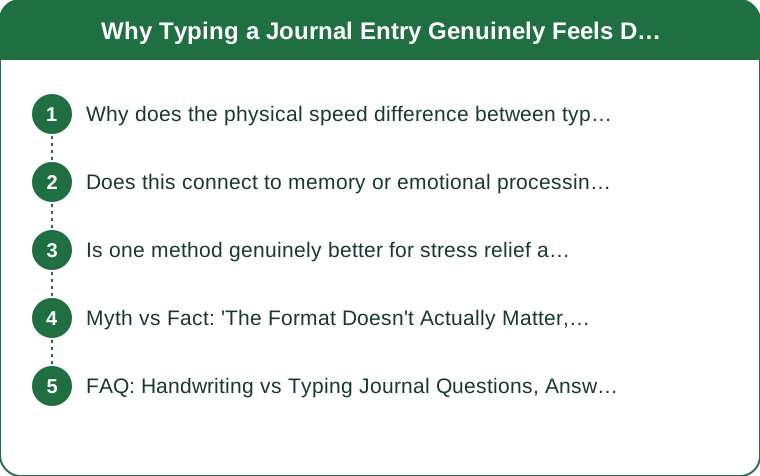
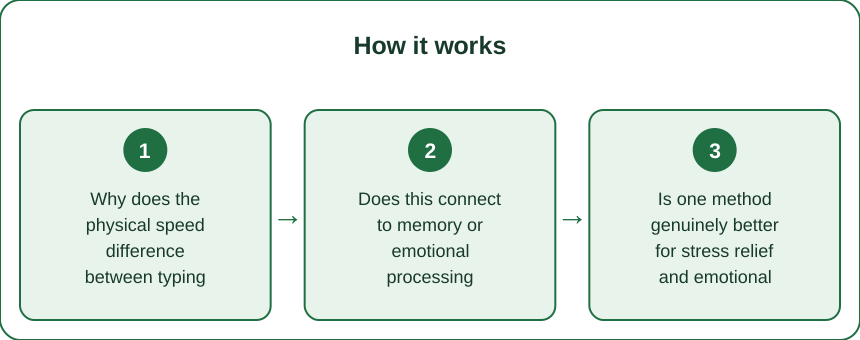
Why does the physical speed difference between typing and handwriting matter for the content itself?
Handwriting is naturally slower than typing for most people, and that slower pace tends to filter and organize thoughts somewhat before they’re written down, producing entries that read as more considered — typing, being faster, can capture more raw, stream-of-consciousness content, which has its own value but is a genuinely different kind of writing.
Does this connect to memory or emotional processing differently?
Some research on note-taking suggests handwriting engages processing and memory encoding somewhat differently than typing, which plausibly extends to journaling — the slower, more physically engaged process of handwriting may support more thorough emotional processing of what’s being written, though this is an area where individual variation is considerable and personal preference matters as much as any general finding.

Is one method genuinely better for stress relief and emotional journaling specifically?
Many people report handwriting feeling more personally cathartic for emotional processing specifically, possibly connected to the slower pace allowing more sitting with a feeling rather than rushing past it — but typing has real practical advantages (speed, searchability, privacy via password protection) that make it the better fit for some people and some purposes, particularly quick daily logging versus deeper reflective entries.
Myth vs Fact: ‘The Format Doesn’t Actually Matter, Only Consistency Does’
Myth: as long as you’re journaling regularly, handwriting versus typing is a purely cosmetic choice. Fact: while consistency matters most for building the habit itself, the format genuinely does shape the character of what gets written — someone journaling for emotional processing specifically might get more out of handwriting’s slower pace, while someone journaling primarily to track patterns and habits over time might benefit more from typing’s searchability and speed.
FAQ: Handwriting vs Typing Journal Questions, Answered
Is it reasonable to use both formats for different purposes?
Yes, and many consistent journalers do exactly this — handwriting for deeper emotional or reflective entries, and a typed format (app or notes) for quick daily logging or gratitude lists where speed matters more than depth.
Does handwriting speed and legibility improve with regular journaling practice?
Generally yes — regular journalers often report their handwriting becoming faster and more comfortable over weeks of practice, which can narrow the initial speed gap between the two formats somewhat.
Should someone who finds handwriting physically uncomfortable (hand fatigue, for example) force it for the reflective benefit?
No — physical discomfort is a legitimate reason to prioritize typing or explore alternatives like voice-to-text, since a format that causes pain or gets abandoned provides none of either method’s benefits.
TL;DR:
- Handwriting’s natural slowness tends to filter and pace thoughts differently than fast typing does
- Some evidence suggests handwriting engages memory and processing differently than typing, though individual variation is real
- Handwriting is often reported as more cathartic for emotional entries; typing wins for speed, searchability, and quick logging
- Using both formats for different journaling purposes is a completely reasonable, common approach
Neither format is objectively correct — but knowing that the mechanics actually shape the content helps you pick the right one for what you’re actually trying to process.
Keep Reading
This article is for general informational and styling purposes only. Fit, sizing, and product availability may vary.