Why Your Journaling Changes When the Evenings Get Dark
Quick Answer: Autumn journaling shifts toward longer, more retrospective, and often heavier entries because earlier darkness moves writing later, melatonin onset shifts, and the season itself cues stock-taking. The shift is normal and useful — but if entries start circling the same problem without moving, that is rumination rather than reflection and it needs a different prompt structure.
The entries change around the end of September. They get longer. They look backward more than they used to. The tone drops a register.
And for a lot of people, they get stickier — the same three concerns showing up week after week without resolving.
None of that is a failure of the practice. It is a predictable seasonal shift, and knowing its shape is what lets you use it.
Why does the writing itself change?
Three mechanisms, one of which is purely about the clock.
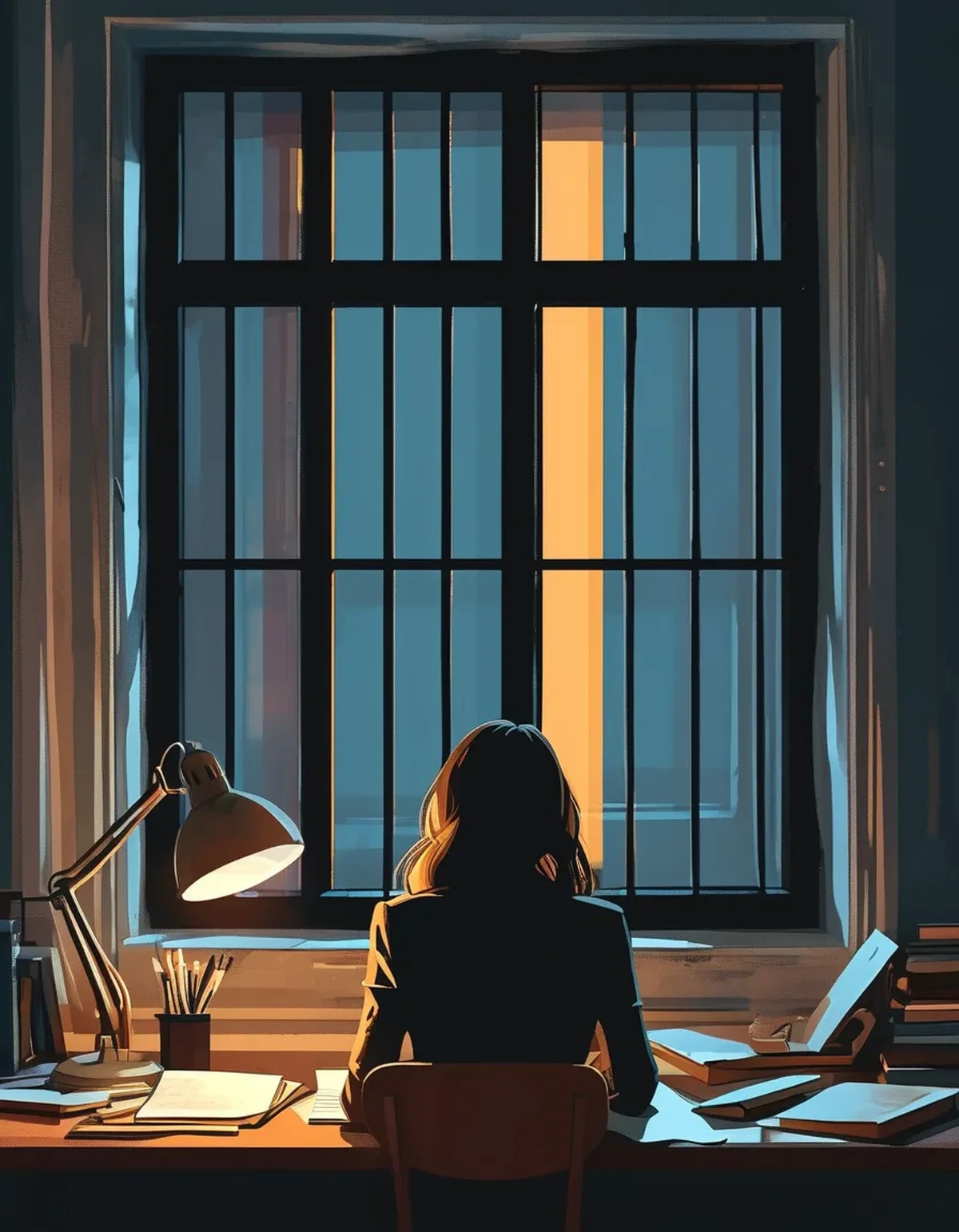
Your writing time moves. In summer, journaling often happens in light — on a porch, before dark, at the end of a long evening. In autumn the same clock hour is dark, and dark writing has a different quality. Earlier melatonin onset in low light shifts you toward a more inward, less action-oriented state, which changes what comes out.
The season is a natural review point. Autumn carries genuine cultural and biographical weight — school years, fiscal quarters, the approaching end of the calendar. People take stock in September and October in a way they do not in June, and the entries reflect it. Retrospective content rises sharply in autumn journals, and that is appropriate rather than morbid.
Mood shifts for some people. Reduced light exposure affects mood measurably in a meaningful portion of the population, from mild seasonal dips to diagnosable seasonal affective disorder. If your entries are getting heavier, some of that may be a signal about light exposure rather than about the things you are writing about.
That last one is worth separating deliberately. A journal is a record of your state as much as of your circumstances, and a consistent tone shift starting in the same week the clocks change is data about the season, not about your life.
What is the difference between reflection and rumination?
This is the most useful distinction in journaling and almost nobody is taught it.
Reflection moves. You write about a problem and the writing arrives somewhere the thinking had not — a reframe, a next step, a recognition. The entry has a shape: it starts somewhere and ends somewhere else.
Rumination circles. You write about the same problem in the same terms, at length, and the entry ends approximately where it started but with more words. It feels productive because it feels like thinking, and it is well documented that this pattern maintains low mood rather than relieving it.
The research on expressive writing is genuinely encouraging — writing about difficult experiences has real benefits for both mental and physical health measures. But the benefit comes from narrative construction: building meaning, sequence, and causality out of the experience. Simply describing distress repeatedly does not produce it, and can entrench the state instead.
How to tell which you are doing: read three entries from the last month. If a concern appears in all three, described the same way, with no movement in how you frame it, that is rumination. It is a signal to change the structure of the prompt, not to write more.
The seasonal relevance: the conditions that produce autumn journaling — darkness, inwardness, retrospection — also favor rumination. The same shift that makes autumn entries richer makes them more likely to circle.

What structures work better in the dark half of the year?
Structure is the intervention. An unstructured prompt in a ruminative state produces more rumination.
Time-boxing. Set a timer for 12 to 15 minutes and stop when it ends, mid-sentence if necessary. This is the single most effective anti-rumination tool available, because rumination expands to fill available time and reflection generally does not need more than fifteen minutes.
Third-person perspective. Writing about yourself as she rather than I creates psychological distance and has genuine evidence behind it for reducing emotional reactivity and improving problem-solving on the same material.
The three-part entry. What happened, what I made it mean, what is actually true. The third part is where the movement happens and it is the part that gets skipped.
A forward-facing prompt at the end. Even one line — what is the next small thing — converts a retrospective entry into one that moves. This matters more in autumn precisely because the season pulls backward.
Explicit gratitude, but specifically. Not a list of general good things, which becomes rote fast, but one specific moment from the past 24 hours in enough detail that you could picture it. Specificity is what produces the effect; generality produces a chore.
And separate the containers. Keep problem-processing and reflection in different sections or different books. A single notebook where everything goes tends to become a repository of difficulty, which changes how it feels to open it — and how it feels to open it determines whether you keep doing it in February.
How do you keep the practice going through winter?
The habit mechanics, which matter more than any prompt.
Move the ritual before the darkness rather than after it. Many people find morning journaling works better from November onward, when evening writing has become both dark and depleted. This is a genuinely different practice — mornings tend to produce forward-facing entries and evenings retrospective ones — and switching seasons is a reasonable thing to do deliberately.
Make the light good. A warm lamp at the desk, not overhead lighting. This sounds trivial and it changes whether you sit down.
Shrink the minimum. Three sentences counts. The habit surviving matters more than the depth of any individual entry, and the entries that begin as three sentences frequently do not stay that way once you have started.
Keep the physical book visible. Journaling is a prompted behavior, and it dies quietly when the notebook goes in a drawer in October.
And read back deliberately, once a season. Autumn is the natural time for this — reading spring and summer entries from a darker vantage point is where the actual value of a long-running journal shows up. Patterns you cannot see from inside a week become obvious across six months.
One honest note: if entries are consistently heavy, if the low tone has persisted for several weeks, or if writing consistently leaves you feeling worse rather than clearer, that is worth taking seriously rather than journaling harder. Seasonal mood changes are common and treatable, and light exposure, exercise, and professional support all help. A journal is a good tool for noticing that pattern — it is not the treatment for it.
TL;DR:
- Autumn entries get longer, darker, and more retrospective because writing time moves into darkness, melatonin shifts you inward, and the season cues stock-taking.
- Reflection moves and rumination circles — read three entries from the last month to tell which you are doing.
- Time-box to 12 to 15 minutes; rumination expands to fill available time.
- Third-person perspective, a three-part structure, and one forward-facing line at the end all counter the seasonal pull backward.
- Consider switching to morning journaling from November, keep the light warm, and shrink the minimum to three sentences.
- Consistently heavy entries for several weeks are a signal worth acting on, not a prompt to write more.
Keep Reading
This article is for general informational and styling purposes only. Fit, sizing, and product availability may vary.